

The place
 |
The collective farm founded by the Zionist organization Hehalutz took its name from the borough of Warsaw where it was located. Situated on the south-eastern outskirts of the city, on the right bank of the Vistula, it officially became part of Warsaw only in 1916. Even then, however, it still retained its largely suburban character. Low rural houses and rows of small tenements gave it the look of a provincial town rather than a metropolis.
The main thoroughfare and principal axis of development was Grochowska Street, which connected the area with the center of Warsaw. By the middle of the 1920s, Grochów was served by a direct tramline to the city center. One could get here by taking the tram 24 – just like nowadays.
Although large in terms of area, Grochów was sparsely populated. On the western end there were a few important factories, such as the Osterloff winery and distillery, Kazimierz Szpotański's electric tools factory and the ammunition plant “Pocisk”. The semirural eastern end was home to the kibbutz, but also to the well-known Zajdel farm. Between the wars, Grochów became popular with newcomers to Warsaw. These were mostly young people trying their luck in the capital, looking for jobs and living in rented rooms or apartments.
Little is known about the history of Jewish presence in Grochów. It certainly had not been a place full of Jews. Only one synagogue existed here – unfortunately, the wooden building did not make it through the war and its exact location is no longer known. The synagogue was the center of local Jewish life, there were several Jewish institutions (a sports club with a football team, among others), workshops and stores. To the locals, this part of the borough was known as the Jewish Paradise.
Hehalutz activists found themselves in Grochów almost by happenstance. They obtained a plot of land that had been purchased by the Jewish community of Warsaw a dozen or so years back for a new Jewish cemetery, but the latter never came into being.
The farm was reached by Grochowska Street, which for many of the kibbutz members was almost like a road straight to Zion and a new life. To get to the kibbutz, one had to get off the tram 24 at the second-to-last stop, amid fields and meadows. Zev Shtultser, who came there in 1927, later recalled:
…..........
In the early years, the kibbutz only comprised a few wooden buildings and a stable. Chanach Wajsbrot, who arrived here in 1922, recalled:
…..........
Most members of the kibbutz lived in rented houses in the area. Some recalled an old Jew, Abraham, who lived in the neighborhood, ran a small store and rented out rooms to pioneers.
In 1925, a brick outbuilding was built. It housed a stable, a barn and a small apartment for the kibbutz agronomist. Accommodation, however, remained a problem. In September 1925, the organization issued an appeal to various Jewish groups:
The accommodation situation in Grochów is dire, the walls of the rented apartment are damp and at risk of collapse. Because of the leaking roof, some members have been suffering from rheumatism. Besides, the house has been earmarked for demolition by the authorities, which means that our members may be left without a roof over their heads. All this forces us to take action with the aim of building a house at Grochów.
To this end, money was collected. The biggest donor turned out to be Henryk Doktorowicz – thanks to his contribution, the construction of the new kibbutz house started in May 1928. The newspapers reported:
On May 29, 1928, a few hundred invited guests gathered at 4 pm on the spot where the building is going to be erected. Among them were representatives of the Ministry of Religious Affairs and Public Education, the Ministry of Agriculture, of Zionist organizations, the Keren Kayemet, the Jewish community and many other institutions.
Speeches were given by the secretary of Hehalutz, spokespersons from the ministries, MP Grynbaum, as well as dr. Feldman, who spoke on behalf of the League of Women. The most memorable speech, however, was given by Doktorowicz – a Jewish philantropist and the main sponsor of the new building.
The building was completed in 1931. To the pioneers who moved in, it felt almost like a palace. It was also at that time when the residential area was clearly separated from the farm as such. The center of the kibbutz was now located at 43 Witolińska Street, while the farm buildings remained between the fields, closer to Grochowska Street.
Meir Ben Mordechai remembered in detail what the white building looked like:
…............
The living conditions were now greatly improved – but not for long.
As the number of members grew in the 1930s, the conditions again started to deteriorate. The white building was not big enough for all the pioneers. The dormitories proved too small, and so each bed had to be shared by two or three people. Gerszon Gal and Arie Fialkow, representatives of Hehalutz who shared a bed together, later recalled:
….................................................
Some of the farm buildings were leased out as a way of securing extra funds to keep the kibbutz afloat.
Despite cramped conditions and problems with accommodation, all the former members agree that the Grochów kibbutz was a unique place with a special, family-like atmosphere of mutual kindness. Rivka Harel (Borowik) later wrote:
….............................
A similar view was expressed by Szlomo Minc:
…...........
The farm did not survive the war: the white building and the outbuildings were bombed as early as 1939. Today, not a single physical trace of the kibbutz remains.
After the war, the borough was largely transformed. Starting from the 1950s, Grochów saw a period of dynamic growth, which resulted in many new urban housing projects. There was an influx of new inhabitants. Former kibbutz grounds were turned into allotment gardens, a lowrise commercial building was also built there. The 1970s saw the construction of a big housing complex.
From the perspective of the city center, Grochów remains a faraway suburb. Dubbed Chamowo (“Boortown”) by the famous postwar writer Miron Białoszewski and long associated with social problems, it is a rather unlikely destination for Warsaw's inhabitants and tourists alike. Today, however, the borough is entering a new stage. More and more young people are moving in, there is a number of NGOs and ongoing community projects focusing on both the present and the past. People with long-standing ties to Grochów are now making efforts to preserve the memory of all that was special about it.
The memory of the Grochów kibbutz is now all but lost among the locals. Only a handful of people who have lived here for their entire lives know about the Jewish collective farm, which stood where the apartment blocks are now. Most inhabitants came here from elsewhere and know little about the history of the place.
Israeli school trips sometimes show up in Grochów, much to the bafflement of the locals, who try to come up with an explanation -- and sometimes end up making up legends. False stories circulate about a rabbi who is said to have lived on the former kibbutz grounds, wartime casualties buried there or a synagogue or cemetery believed to have existed in the area. The Szymon An-ski Association is working to restore the memory of the place and dispel myths.

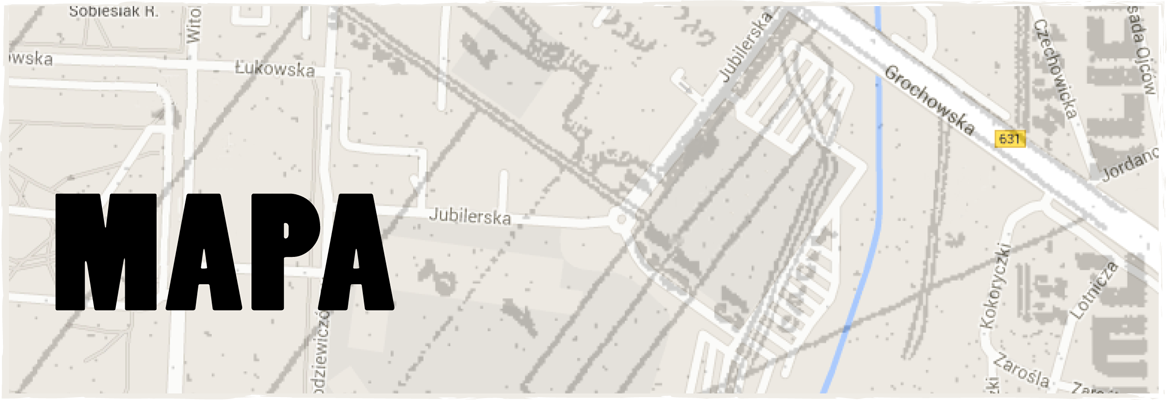
Kliknięcie w baner „Mapa” spowoduje otwarcie w nowym oknie przeglądarki interkatywnej mapy kibucu (odtworzonej na podstawie zdjęć archiwalnych i lotniczych oraz wspomnień byłych kibucników), nałożonej na współczesną mapę Google Maps.